

Quick Summary:
“The lymphatic system has no central pump and depends on muscle contractions and movement to keep fluid circulating through the body. Extended periods of sitting reduce that movement, which is why people often notice swollen legs, heavy ankles, and a general feeling of physical sluggishness after long periods of inactivity.”
Sitting too long affects fluid movement because the lymphatic system depends on muscle contractions to move fluid through its vessels, and prolonged sitting removes the primary source of that movement in the lower body. The calf muscles, which act as the main pump for both venous blood and lymph fluid in the legs, stop contracting during extended sitting. Without that pump action, fluid pools in the lower limbs and extremities.
Poor leg circulation from sitting and leg swelling from sitting are both expressions of the same underlying mechanism. They are the body’s way of signaling that fluid movement has slowed in the lower limbs due to inactivity. Regular movement breaks, ankle exercises, leg elevation, and compression garments are all practical approaches to supporting fluid movement during periods of extended sitting. For people looking to understand the broader picture of how lymphatic congestion develops and what it feels like, the physical effects are well documented in the context of lifestyle-related fluid accumulation.
How the Lymphatic System Relies on Movement
The cardiovascular system has the heart to pump blood through the body. The lymphatic system has no equivalent. It is a passive network that moves lymph fluid through vessels and nodes using external pressure generated by muscle contractions, breathing, and body movement. When you walk, climb stairs, or even shift your weight from one foot to the other, the muscles in your legs compress the lymphatic vessels and push fluid upward through the system.
Sit still for an extended period and that muscle activity stops. The fluid that would ordinarily be moved through the lymphatic vessels and returned to the bloodstream instead begins to accumulate in the surrounding tissues. In the lower body, where gravity is already working against the system, this accumulation shows up relatively quickly.
What Happens When You Sit for Too Long
Prolonged sitting affects fluid movement in a fairly predictable way. As the calf muscles stop contracting, the lower leg loses its primary mechanism for pushing lymph fluid and venous blood back up toward the heart. Fluid begins to pool in the tissues of the lower legs, ankles, and feet. This is why signs of fluid buildup are so common after long periods of sitting.
The position of sitting itself compounds this. With the knees bent and the backs of the thighs pressed against a chair, the natural flow of fluid through the lower body is partially obstructed. Extended time in this position, particularly without any postural changes or movement breaks, creates conditions where fluid accumulation in the lower legs becomes increasingly noticeable.
Why Do Legs Swell When Sitting for Long Periods?
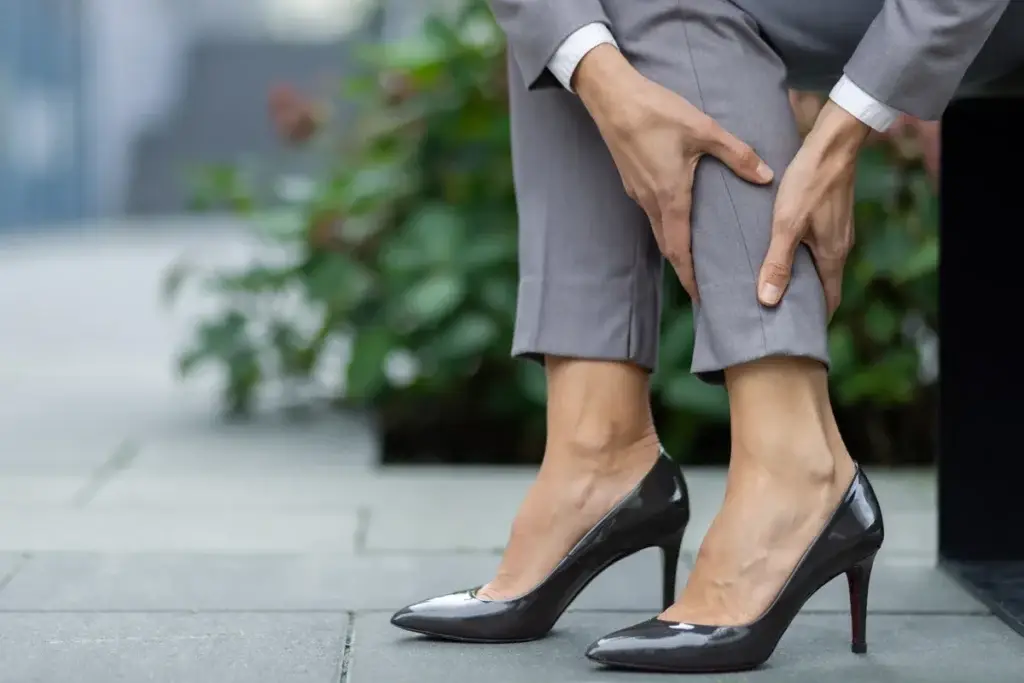
Leg swelling from sitting is one of the most commonly reported physical discomforts associated with desk-based work, long-haul travel, and sedentary lifestyle patterns. The mechanism is straightforward: without the muscle pump action of the calves, fluid accumulates in the lowest point of the body that gravity can pull it to.
The result is typically a gradual build-up across the course of a day. Legs that feel fine in the morning feel noticeably heavier and look visibly puffier by the afternoon. Socks leave indentations that take longer than usual to fade. Shoes feel tighter. These are all physical signals that fluid has been building up in the lower limbs rather than moving efficiently through the body’s drainage systems.
Poor Circulation from Sitting and Lymphatic Function
Poor leg circulation from sitting is closely connected to lymphatic flow because the lymphatic and venous systems work in parallel in the lower body. Both depend on the calf muscle pump. When that pump is inactive due to prolonged sitting, both venous return and lymphatic drainage are affected simultaneously.
This is also why the effects of sitting too long are often felt as both heaviness and puffiness rather than one or the other. The heaviness reflects impaired venous return. The puffiness reflects accumulation of fluid in the interstitial tissues as the lymphatic system falls behind on its clearance work. The two processes are happening at the same time, in the same part of the body, for the same underlying reason.
Sitting All Day at a Desk and Fluid Accumulation
Office and desk-based workers are among the groups most commonly affected by fluid accumulation from prolonged sitting. A typical working day can involve six to eight hours of seated time, often with minimal movement between tasks. Unlike occupations that involve regular walking or standing, desk-based roles remove most of the incidental movement that would ordinarily keep the lymphatic and venous systems active in the lower body.
The effects are cumulative rather than sudden. A single hour of sitting is unlikely to produce noticeable fluid accumulation. But across a full working day, with only brief interruptions, the gradual pooling of fluid in the lower legs becomes the kind of discomfort that many desk workers have simply normalized as part of how their legs feel by late afternoon.
How to Relieve Leg Swelling from Sitting
The most direct way to address fluid accumulation from prolonged sitting is to restore the movement associated with lymphatic and venous return in the lower body. This does not require a formal exercise session. Even small amounts of movement at regular intervals are more consistent with how the lymphatic system is designed to receive its inputs than occasional bursts of activity separated by long periods of stillness.
Practical approaches that many people find useful include:
- Taking a short walk every 45 to 60 minutes, even just to another room or around the office
- Doing ankle circles and foot pumps while seated, which engage the calf muscles without requiring you to stand
- Elevating the legs briefly during rest periods to allow gravity to assist rather than work against fluid return
- Using a footrest or standing desk to vary position and reduce the sustained pressure on the backs of the thighs
- Wearing graduated compression socks during long periods of sitting, which apply external pressure that partially compensates for reduced calf muscle activity
These are practical everyday adjustments rather than clinical interventions. They work with the body’s own systems rather than replacing them. Persistent or worsening swelling, particularly if it occurs in one leg only or is accompanied by other symptoms, should be assessed by a healthcare provider.
What to Do After Sitting Too Long
After an extended period of sitting, such as a long-haul flight or a full day at a desk with minimal movement breaks, the body’s priority is to restore active circulation in the lower limbs. Getting up and walking, even briefly, is the most immediate way to re-engage the calf muscle pump and encourage fluid to move back through the venous and lymphatic systems.
Walking: Even a 5 to 10 minute walk after a long period of sitting engages the calf muscles and encourages fluid movement in the lower legs.
Leg elevation: Resting with the legs elevated above hip level for 15 to 20 minutes after prolonged sitting allows gravity to assist venous and lymphatic return.
Calf raises and ankle movements: Simple movements like rising onto the toes or rotating the ankles can be done immediately after sitting and begin engaging the lower leg muscles without requiring a full walk.
Hydration: Drinking water after extended sitting is commonly recommended as part of maintaining general fluid balance, though individual needs vary.
Sedentary Lifestyle and the Lymphatic System
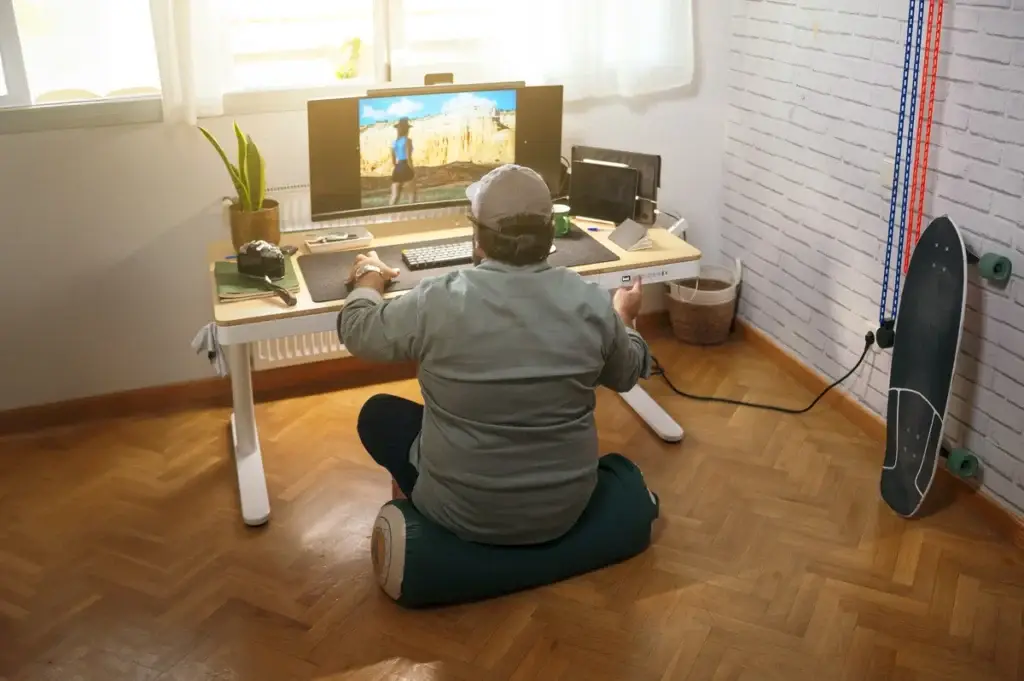
A consistently sedentary lifestyle creates an ongoing pattern of reduced lymphatic activity rather than an isolated episode of fluid accumulation. Over time, people with predominantly sedentary routines may notice that the heaviness and puffiness in their legs is a persistent baseline rather than an occasional response to a long day. Understanding why the lymphatic system slows down in the context of inactivity helps explain why this pattern develops and why regular movement is so consistently emphasized in lymphatic wellness conversations.
Building movement into a predominantly sedentary routine does not require significant lifestyle changes. The goal is to interrupt the periods of complete stillness that allow fluid to accumulate unchecked. Short, frequent movement breaks align naturally with how the lymphatic system receives its inputs.
Professional Lymphatic Support in a Sitting-Heavy Lifestyle
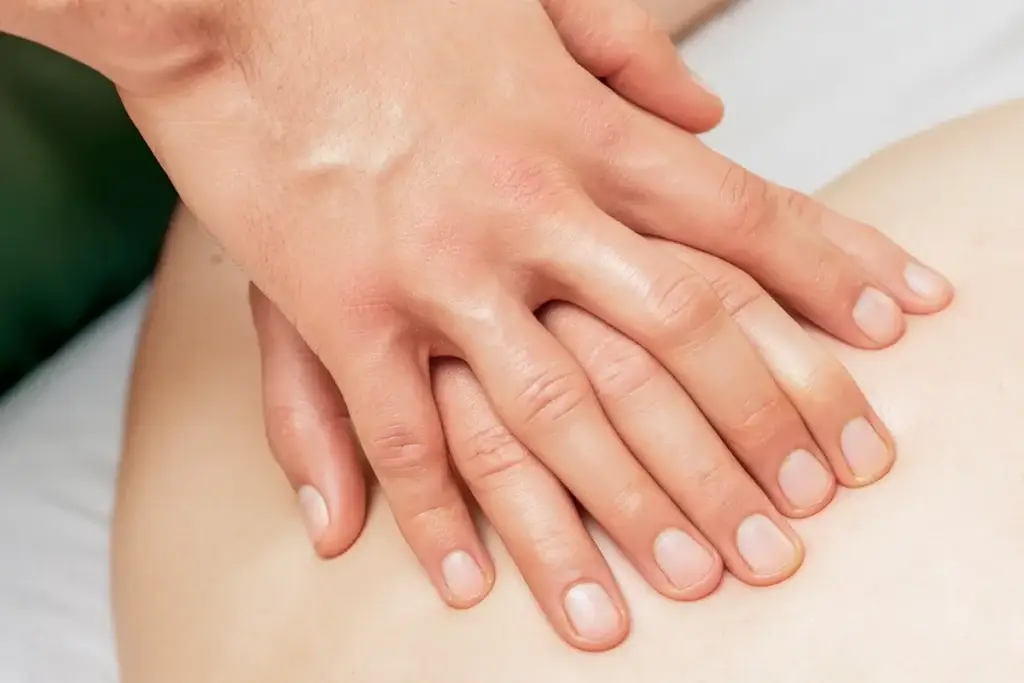
For people whose lifestyle or occupation involves significant amounts of sitting, professional lymphatic drainage approaches offer a structured way to address fluid accumulation that goes beyond what everyday movement can provide. Manual lymphatic drainage performed by a certified therapist targets specific lymphatic pathways in the lower body and follows a sequenced approach designed to move fluid that has accumulated in the tissues. For more on what this involves, what to expect during a lymphatic drainage session covers the full process.
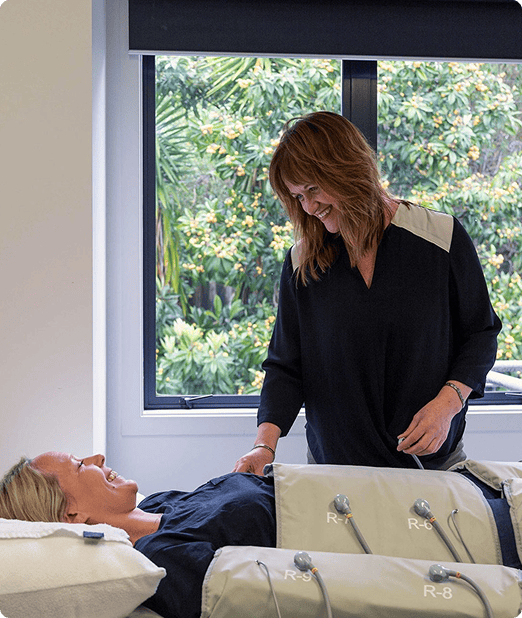
Flowpresso® is an FDA-cleared Class II medical device that combines cyclic pneumatic compression, gentle thermotherapy, and deep pressure stimulation in a supervised 40-minute session. It is designed for use under the supervision of a licensed healthcare practitioner and is not intended to diagnose, treat, cure, or prevent any disease. Practitioners across chiropractic, naturopathic, functional medicine, and wellness settings incorporate it into broader wellness protocols for patients whose lymphatic system would benefit from structured, professional support.
FAQ's
Can Feet Swell from Sitting Too Long?
Yes, feet and ankles are among the most commonly affected areas during prolonged sitting. Gravity pulls fluid toward the lowest point of the body, and without the calf muscle pump to counteract this, fluid accumulates in the feet, ankles, and lower legs. This is why foot and ankle swelling is so common among desk workers, long-distance travelers, and others who spend extended periods seated without regular movement.
What Does Poor Leg Circulation from Sitting Feel Like?
Poor leg circulation from prolonged sitting is commonly described as a heaviness or tiredness in the legs, visible puffiness around the ankles and lower calves, sock marks that take longer than usual to fade, and shoes that feel tighter by the end of the day. Some people also notice a mild aching or throbbing sensation in the lower legs, particularly after standing up following a long period of sitting.
How Do You Relieve Swollen Legs from Sitting All Day?
Getting up and walking is the most immediate practical response to leg swelling from prolonged sitting. Even a 5 to 10 minute walk re-engages the calf muscle pump and encourages fluid movement in the lower body. Elevating the legs above hip level, doing ankle circles while seated, staying hydrated, and wearing graduated compression socks during long sitting periods are all commonly used approaches. Persistent or worsening swelling should be discussed with a healthcare provider.
Can Sitting Too Long Cause Fluid Retention?
Prolonged sitting is associated with temporary fluid accumulation in the lower body rather than systemic fluid retention in the clinical sense. The fluid that pools in the legs during extended sitting is lymph fluid and venous blood that have not been adequately returned to circulation due to reduced muscle activity. This typically resolves with movement and is distinct from fluid retention caused by medical conditions, which should be evaluated by a healthcare provider.
Is Leg Swelling from Sitting Serious?
Occasional mild swelling after a long day of sitting or a lengthy journey is common and generally not a cause for concern. It typically resolves with movement and rest. Swelling that is persistent, worsens over time, occurs in one leg only, is accompanied by pain, redness, or warmth, or appears alongside other symptoms should be evaluated by a healthcare provider to rule out underlying conditions that may require medical attention.