

Quick Summary:
“Professional lymphatic drainage is performed or supervised by licensed healthcare practitioners using specialist techniques and clinical devices, while at-home approaches include self-massage, dry brushing, movement, and consumer tools. Both have a place in a well-rounded wellness routine, and the right choice depends on individual goals, lifestyle, and guidance from a qualified healthcare provider.“
Deciding between a professional lymphatic drainage session and doing something at home is a question a lot of people wrestle with. Cost, convenience, recovery goals, and how much time you have all factor in. The two approaches are genuinely different in what they offer, and understanding those differences makes it a lot easier to figure out which one, or which combination, makes sense for you.
Why the Choice Between Professional and At-Home Matters
The lymphatic system has no central pump. It depends entirely on movement, muscle contractions, and breathing to keep fluid circulating. That means anything that supports fluid movement, whether a hands-on session with a trained therapist or a daily walk, is working with the same underlying mechanism. Understanding why the lymphatic system slows down in the first place helps clarify why both approaches can be useful.
The difference between professional and at-home approaches is not a question of real versus fake. Both can be genuinely useful. The question is whether what you are doing matches what you are trying to achieve. A dry brushing routine before a shower is a very different proposition from a 40-minute manual session with a certified lymphatic therapist, and treating them as equivalent sets unrealistic expectations in both directions.
What Professional Lymphatic Drainage Involves
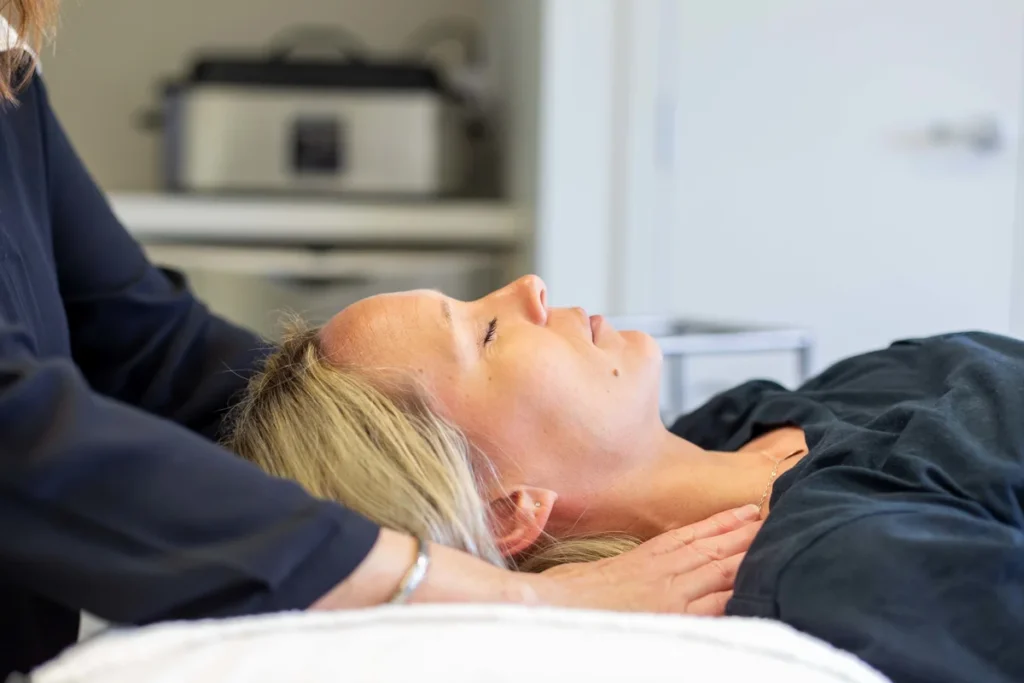
Professional lymphatic drainage means a licensed practitioner is either performing the session directly or supervising it. The most established hands-on form uses very light, rhythmic strokes applied in specific directions across the skin. The pressure is intentionally minimal because the lymphatic vessels sit just below the skin’s surface and respond to gentle stimulation. A trained therapist follows precise sequencing, starting at the lymph node clusters and working outward.
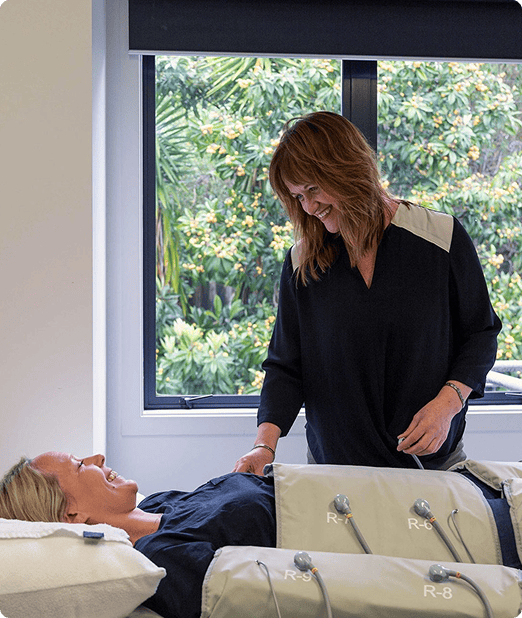
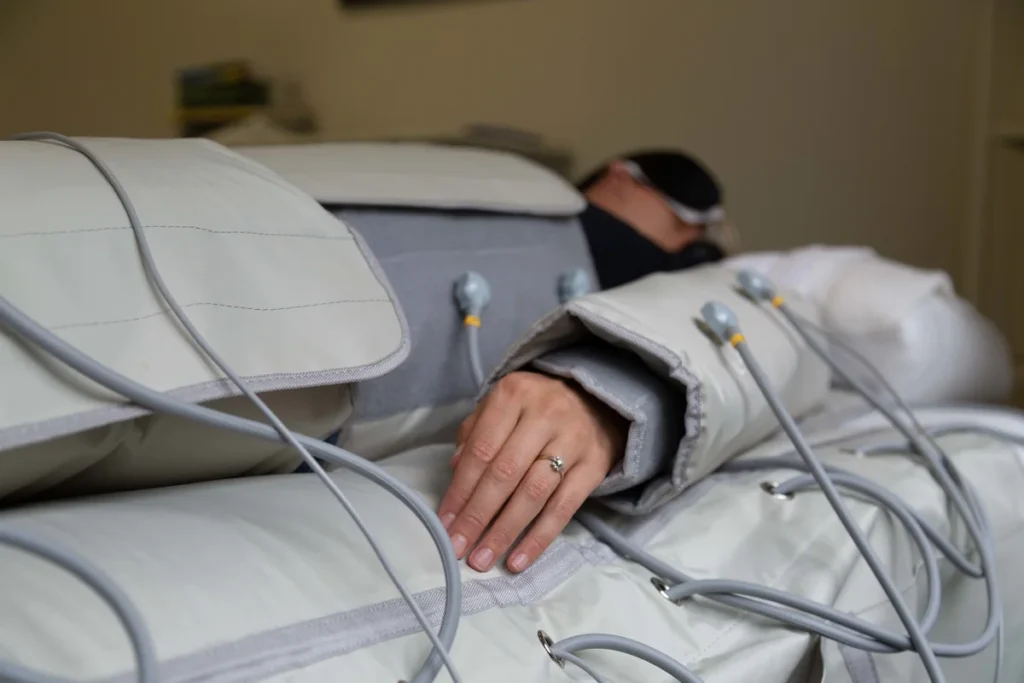
Professional settings also include device-based approaches such as pneumatic compression systems. These deliver sequential air pressure through a full-body garment under practitioner supervision, covering the legs, torso, and arms in a single calibrated session.
Some systems like Flowpresso®, combine full-body compression with integrated heat and sustained deep pressure, creating a layered session that blends multiple wellness modalities into a single treatment. Instead of relying on compression alone, the added warmth and deep pressure provide a more comprehensive sensory experience that many users find calming and restorative, while remaining clinically structured and fully customizable.
What defines the professional approach in both cases is the practitioner involvement: the assessment before the session, the tailoring of technique or device settings to the individual, and the clinical oversight throughout.
What At-Home Lymphatic Drainage Involves
At-home lymphatic drainage is a broader category than most people realize. It ranges from structured self-massage techniques taught by therapists to simple daily habits that keep fluid moving without any specialist knowledge at all.
Common at-home approaches include:
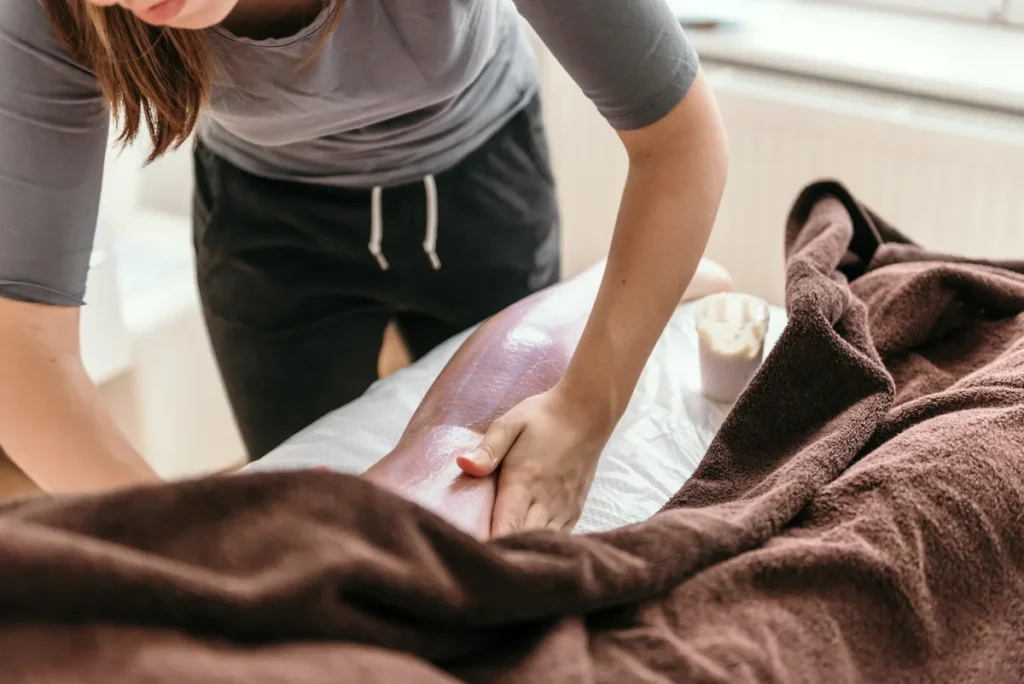
- Self-massage: Light, gentle strokes applied to the skin following simplified lymphatic pathways, often taught by therapists for use between professional sessions
- Dry brushing: Using a natural bristle brush across the skin before showering to stimulate surface circulation
- Movement and exercise: Walking, yoga, rebounding, and stretching activate the muscle contractions that naturally drive fluid through the body and are among the most practical signs of poor lymphatic drainage you can address at home
- Compression garments: Static graduated compression socks or sleeves that provide ongoing circulatory support throughout the day
- Consumer devices: Handheld massagers, vibration tools, and basic home compression devices designed for personal use
While these are great tools, one of these replicate what a trained practitioner does. They serve a different purpose: supporting healthy lymphatic habits between professional sessions and as part of an everyday wellness routine.
Key Differences Between the Two Approaches
Here is a straightforward comparison across the factors that matter most when deciding between the two:
|
Factor |
Professional |
At-Home |
|
Supervision |
Licensed practitioner supervised |
Self-directed |
|
Technique |
Trained specialist methods |
Simplified self-care techniques |
|
Equipment |
Clinical devices and specialist tools |
Consumer tools and garments |
|
Coverage |
Full body or targeted, tailored per session |
Typically partial and self-applied |
|
Customization |
Tailored to individual health context |
General wellness approach |
|
Session length |
45 to 90 minutes (manual) or 40 minutes (device) |
Variable, typically shorter |
|
Cost |
Higher per session, usually less frequent |
Lower upfront, ongoing investment |
|
Convenience |
Requires booking and travel |
Available any time at home |
When Professional Supervision Makes Sense
Some situations call for professional involvement rather than self-care, not because at-home approaches are inadequate but because the individual’s circumstances benefit from clinical expertise and oversight.
Post-surgical recovery. After procedures like liposuction, tummy tucks, or other surgeries that disrupt lymphatic pathways, professional lymphatic support is sometimes incorporated into recovery plans. The technique and timing matter significantly in this context, which is why practitioner guidance is important.
Specific health conditions. People with lymphedema, chronic swelling, or other conditions affecting the lymphatic or circulatory systems benefit from working with a licensed practitioner who can tailor the approach to their specific health picture.
Recovery-focused wellness goals. For those using lymphatic drainage as part of a structured recovery program, whether from surgery, injury, or intensive physical training, a professional session offers a more structured and personalized approach than self-care.
First-time sessions. Starting with a professional session is useful for anyone new to lymphatic drainage. A trained therapist can teach the correct technique, explain what to expect, and advise on what to do at home between appointments.
When At-Home Approaches Work Well
At-home lymphatic drainage is genuinely practical for a wide range of everyday situations. It works best when the goal is general wellness maintenance rather than targeted clinical support.
After long periods of sitting or travel. Light self-massage, walking, or rebounding after a desk-heavy day or a long flight is designed to support fluid movement and may help ease the heaviness that comes from reduced activity.
Between professional sessions. Therapists often teach simplified self-massage techniques specifically for patients to use between appointments. Used consistently, these may support continuity between professional sessions.
General circulation support. Daily habits like staying hydrated, wearing compression garments during long periods of inactivity, and incorporating regular movement are accessible and commonly used approaches for everyday lymphatic health.
Budget or access considerations. Professional sessions are not accessible for everyone on a regular basis. A well-structured at-home routine offers meaningful support for people who cannot attend regular professional appointments.
How Flowpresso Fits Into Professional Lymphatic Care
Flowpresso® is an FDA-cleared Class II medical device designed for use under the supervision of a licensed healthcare practitioner. It combines cyclic pneumatic compression, gentle thermotherapy, and deep pressure stimulation into a single 40-minute session through a full-body clinical compression suit. It is particularly common in lymphatic drainage for post surgery recovery protocols and broader clinical wellness programs.
It sits firmly within the professional category. Sessions are conducted under practitioner supervision, settings are calibrated to the individual, and it is used by chiropractors, physical therapists, naturopathic doctors, and functional medicine practitioners as part of broader wellness protocols. It is not intended to diagnose, treat, cure, or prevent any disease.
Common Misconceptions
Professional lymphatic drainage is only for people recovering from surgery. It is used across general wellness programs, athletic recovery routines, functional medicine protocols, and stress management practices. Surgery recovery is one specific context within a much wider range of applications.
At-home techniques produce identical results for everyone. Individual results from at-home approaches vary considerably depending on the technique used, how consistently it is applied, and the person’s overall lifestyle and health. There is no universal outcome.
More pressure means better results. Lymphatic vessels sit just below the skin’s surface and respond to gentle stimulation. Firm pressure compresses rather than stimulates them. Lighter pressure applied with correct technique is generally considered more suitable for lymphatic support.
At-home tools are a substitute for professional care. Consumer tools have a practical role in everyday wellness. They work best alongside professional sessions and healthy habits, not as a direct replacement for supervised clinical care, particularly for those with specific health considerations.
What Is the Difference Between Professional and At-Home Lymphatic Drainage?
Professional lymphatic drainage is delivered or supervised by licensed practitioners using specialist techniques or clinically calibrated devices, tailored to the individual’s health context. At-home approaches, including self-massage, dry brushing, movement, and consumer tools, are self-directed and follow simplified techniques without clinical oversight.
The practical difference is in depth, precision, and supervision. A professional session follows the body’s specific lymphatic pathways with trained precision. An at-home routine provides general support using accessible techniques. People who experience lymphatic congestion or persistent symptoms are generally better served by professional care than self-directed approaches. Both serve real purposes and are most effective when used together rather than as competing alternatives.
Choosing the Right Approach
For most people, the answer is not one or the other. It is a combination that makes practical sense for their lifestyle and goals. Professional sessions for structured, supervised care. At-home habits to keep things moving in between. Understanding how compression therapy improves circulation and recovery can also help inform which professional options make sense for any individual’s situation.
Starting with a professional session is a reasonable approach for anyone new to lymphatic drainage. A trained practitioner can assess what is appropriate, teach at-home techniques that complement the clinical work, and advise on how often professional sessions are useful based on individual circumstances.
FAQ's
What Is Professional Lymphatic Drainage?
Professional lymphatic drainage is performed or supervised by licensed healthcare practitioners, including certified lymphatic therapists, physiotherapists, chiropractors, and other trained professionals. It includes manual lymphatic drainage massage and device-based approaches such as pneumatic compression systems used in clinical settings. Sessions are tailored to individual wellness goals and health context.
Can You Perform Lymphatic Drainage at Home?
Yes, and plenty of people do. Self-massage, dry brushing, walking, rebounding, and compression garments are all practical ways to support lymphatic flow at home. They work best as regular habits rather than occasional interventions, and they complement professional sessions well rather than replacing them.
What Is the Difference Between Professional and At-Home Lymphatic Drainage?
Professional lymphatic drainage is supervised by licensed practitioners using specialist techniques and clinical equipment tailored to the individual. At-home approaches involve self-care techniques and consumer tools used independently. Professional sessions offer greater precision, customization, and clinical oversight. At-home approaches offer accessibility, convenience, and ongoing wellness support.
Do At-Home Lymphatic Drainage Techniques Work?
They can, particularly as part of a consistent wellness routine. Individual results vary depending on which technique is used, how regularly it is applied, and the person’s overall lifestyle. At-home approaches are most useful as a complement to professional care and healthy daily habits rather than as a substitute for supervised clinical sessions.
Is Professional Lymphatic Drainage Only for Surgery Recovery?
Not at all. While post-surgical lymphatic drainage is a well-known application, professional sessions are also used in general wellness programs, athletic recovery routines, functional medicine protocols, and stress management practices. Surgery recovery is one specific context within a much wider range of uses.
What Role Do Compression Therapy Devices Play in Professional Lymphatic Care?
Compression therapy devices used in professional settings apply sequential pneumatic pressure through a clinical garment to support lymphatic flow and circulatory comfort under practitioner supervision. Advanced clinical systems like Flowpresso® add thermotherapy and deep pressure stimulation alongside compression, offering a multi-modal session experience within a supervised clinical context.