


We regularly receive questions from practitioners and healthcare professionals asking whether Flowpresso® is an External Counterpulsation (ECP) machine.
It’s an understandable question. Both technologies use external compression and involve applying controlled pressure to the body. However, despite some similarities in their use of compression, Flowpresso and ECP are fundamentally different technologies designed for different therapeutic purposes.
The short answer is no. Flowpresso is not an ECP machine.
External Counterpulsation is a specialized cardiovascular treatment that uses precisely timed compression, synchronized with the cardiac cycle, to influence blood flow and reduce the workload of the heart.
Flowpresso, on the other hand, is a professional 3-in-1 lymphatic therapy system combining compression, thermotherapy, and deep pressure therapy. Its approach is designed to support lymphatic care, fluid management, relaxation, and recovery.
Understanding the differences is important, particularly for practitioners considering how these technologies fit within a broader approach to patient care.
In this article, we’ll explain how each technology works, where they differ, and why they may be considered complementary rather than competing treatments.
What Is External Counterpulsation (ECP)?
External Counterpulsation, commonly referred to as ECP or Enhanced External Counterpulsation (EECP), is a non-invasive cardiovascular treatment primarily associated with the management of chronic, refractory angina.
Angina is chest discomfort or pain that occurs when the heart muscle does not receive enough oxygen-rich blood. It is commonly associated with coronary artery disease.
ECP was developed to help improve blood flow to the heart and reduce the heart’s workload through a process known as counterpulsation.
How Does an ECP Machine Work?
An ECP machine typically uses a series of inflatable pneumatic cuffs positioned around the patient’s calves, lower thighs, and upper thighs or buttocks.
These cuffs inflate and deflate in synchronization with the patient’s heartbeat, using electrocardiogram (ECG) monitoring to coordinate the compression cycle.
The treatment works in two main phases:
1. Diastolic Inflation
During diastole, when the heart relaxes between contractions, the cuffs inflate sequentially from the calves upward toward the thighs and buttocks.
This creates a pressure wave that moves blood from the lower extremities toward the heart, increasing diastolic pressure and supporting coronary blood flow.
2. Systolic Deflation
Immediately before the heart contracts, the cuffs rapidly deflate.
This reduces resistance against which the heart must pump, helping reduce cardiac workload.
The combination of these two actions is intended to improve myocardial perfusion and reduce the symptoms of angina in appropriately selected patients.

What Is ECP Used For?
ECP is a specialized cardiovascular intervention, generally considered for selected patients with chronic angina who continue to experience symptoms despite conventional medical or surgical treatment.
Treatment is typically delivered in a clinical setting under medical supervision.
A commonly described treatment protocol involves approximately 35 one-hour sessions, usually delivered five days per week over seven weeks. Individual protocols depend on the device, clinical circumstances, and prescribing healthcare professional.
ECP is not a general lymphatic drainage treatment or a standard whole-body recovery modality. Its primary purpose is to influence cardiovascular hemodynamics through precisely timed compression.
What Is Flowpresso?
Flowpresso is a professional 3-in-1 lymphatic therapy system that combines three therapeutic modalities:
Compression therapy.
Thermotherapy.
Deep pressure therapy.
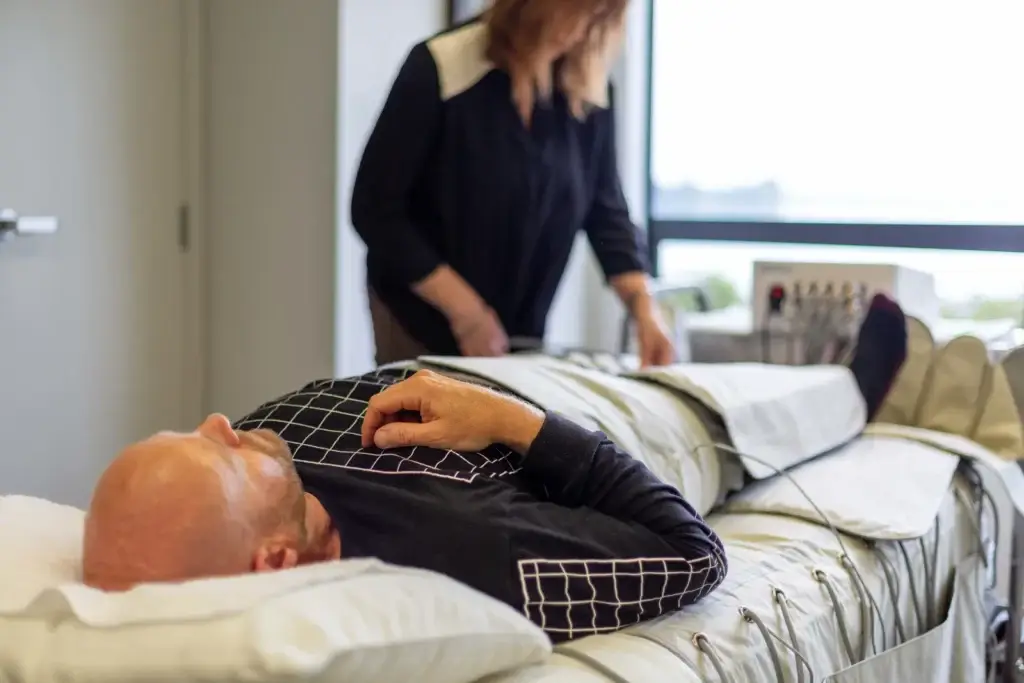
The system uses a full-body treatment suit designed to apply controlled compression alongside therapeutic heat and deep pressure.
Unlike ECP, Flowpresso does not synchronize its compression cycle with the patient’s heartbeat. It does not use cardiac timing to create diastolic augmentation or systolic unloading.
Instead, its approach focuses on applying controlled external pressure and thermotherapy as part of a broader lymphatic and recovery-focused treatment experience.

How Does Flowpresso Work?
Flowpresso combines three modalities within one treatment system.
1. Compression Therapy
The system uses sequential compression to apply controlled pressure through its full-body suit.
Compression is an established component of lymphatic management and is used in a range of clinical settings to help manage fluid accumulation.
2. Thermotherapy
Flowpresso incorporates therapeutic heat as part of its treatment approach.
Thermotherapy is designed to provide a warming experience during treatment and distinguishes the system from compression-only devices.
3. Deep Pressure Therapy
The system combines compression with a deeper pressure experience across the body.
This creates a treatment approach that differs from conventional compression-only equipment.
Flowpresso offers adjustable treatment settings, with pressure capabilities up to 130 mmHg, subject to the device’s instructions for use and appropriate clinical assessment.
Flowpresso vs. ECP: What Are the Main Differences?
Although both technologies use pneumatic compression, the underlying mechanisms, treatment objectives, and clinical applications are different.
| Feature | External Counterpulsation (ECP/EECP) | Flowpresso |
|---|---|---|
| Primary focus | Cardiovascular support and management of selected angina symptoms | Lymphatic therapy and recovery-focused treatment |
| Main technology | ECG-synchronized pneumatic compression | Compression, thermotherapy, and deep pressure therapy |
| Compression timing | Precisely synchronized with the cardiac cycle | Not synchronized with the heartbeat |
| Treatment areas | Primarily calves, thighs, and buttocks | Full-body treatment suit |
| Primary mechanism | Diastolic augmentation and systolic unloading | Controlled compression combined with heat and deep pressure |
| Cardiac monitoring | ECG synchronization is central to treatment | Does not use ECG synchronization |
| Treatment environment | Medical or cardiovascular clinical setting | Professional wellness and healthcare settings, subject to appropriate indications and practitioner training |
| Typical treatment focus | Selected patients with chronic refractory angina | Lymphatic care, fluid management, relaxation, and recovery support |
The most important distinction is the purpose behind the compression.
ECP uses cardiac-synchronized compression to influence blood flow and cardiovascular function.
Flowpresso uses compression alongside thermotherapy and deep pressure as part of a different therapeutic approach.
While the technologies share the principle of applying external pressure, they should not be considered interchangeable.
Why Do People Confuse Flowpresso With ECP?
The confusion is understandable, particularly for practitioners familiar with pneumatic compression technologies.
Both systems:
Use external compression.
Incorporate pneumatic technology.
Apply pressure through specialized equipment.
Use controlled compression sequences.
Are non-invasive treatment approaches.
However, the fact that two devices use compression does not mean they operate in the same way or have the same clinical applications.
The key difference is how the compression is delivered and what physiological response the technology is designed to achieve.
With ECP, compression is precisely timed to the cardiac cycle to influence arterial blood flow and cardiac workload.
With Flowpresso, compression is combined with thermotherapy and deep pressure, without cardiac synchronization.
Understanding this distinction helps practitioners communicate accurately with patients and avoid confusing two very different treatment technologies.
Can Flowpresso and ECP Complement Each Other?
Potentially, yes. However, it is important to understand what complementary means in this context.
Flowpresso and ECP are designed to address different aspects of physiological function. They are not substitutes for one another, and neither should be presented as delivering the clinical outcomes of the other.
For a patient receiving ECP for a cardiovascular indication, Flowpresso may be considered separately as part of a broader approach to lymphatic care, fluid management, or recovery, where clinically appropriate.
The technologies have different treatment objectives:
ECP focuses on cardiovascular hemodynamics.
Its compression sequence is designed to influence blood flow to the heart and reduce cardiac workload.
Flowpresso focuses on compression, thermotherapy, and deep pressure.
Its treatment approach is designed around lymphatic care and a broader recovery experience.
For practitioners, the distinction creates an opportunity to consider different technologies for different therapeutic objectives rather than viewing them as competing systems.
However, complementary use should never be assumed to be appropriate for every patient. Cardiovascular conditions, vascular health, medical history, medications, and individual contraindications must all be considered before introducing additional treatment.
In particular, anyone receiving cardiovascular treatment should have their suitability for Flowpresso assessed by an appropriately qualified healthcare professional.
Understanding the Role of Compression in Different Therapies
Compression is used across several areas of healthcare and rehabilitation, but its application varies significantly depending on the intended outcome.
For example:
Cardiovascular compression therapies
Technologies such as ECP use carefully timed pressure sequences to influence cardiovascular hemodynamics.
Lymphatic compression therapies
Compression garments, bandaging, and pneumatic compression devices are used in selected cases to help manage swelling and support fluid movement.
Recovery and wellness technologies
Other systems combine compression with additional modalities, such as thermotherapy or deep pressure, to create a broader treatment experience.
Although these technologies share some underlying principles, their mechanisms, protocols, and clinical indications are not the same.
For practitioners, understanding the distinction is essential when selecting equipment and developing treatment protocols.
Where Does Flowpresso Fit Within a Modern Clinical Practice?
Flowpresso offers practitioners a different approach to compression-based therapy by combining compression, thermotherapy, and deep pressure within one professional system.
For clinics working with patients who may benefit from lymphatic-focused care or recovery support, it provides an additional treatment modality to consider within an appropriately assessed care plan.
Potential practice applications may include:
Supporting lymphatic care and fluid management.
Incorporating compression-based treatments into broader recovery programs.
Offering an additional modality alongside existing practitioner-led therapies.
Supporting treatment experiences focused on relaxation and physical recovery.
Flowpresso is designed to complement, rather than replace, appropriate medical assessment and conventional healthcare.
Its role within a clinic should be determined by practitioner training, patient suitability, the device’s authorized indications, and individual treatment objectives.
The Bottom Line: Similar Technology, Different Therapeutic Purpose
Flowpresso and External Counterpulsation share one important characteristic: both use external compression.
Beyond that, they are designed to achieve different outcomes.
ECP is a specialized cardiovascular treatment that uses ECG-synchronized compression to influence blood flow to the heart and reduce cardiac workload.
Flowpresso combines compression, thermotherapy, and deep pressure therapy in a professional system designed for lymphatic care and recovery-focused treatment.
For practitioners, understanding these differences helps ensure that the right technology is considered for the right clinical objective.
If you’re exploring compression-based technologies for your practice and want to understand how Flowpresso may complement your existing treatment offering, we’d be happy to talk.
Frequently Asked Questions
No. Flowpresso is not an External Counterpulsation machine. While both technologies use external compression, ECP synchronizes compression with the cardiac cycle to influence cardiovascular blood flow. Flowpresso combines compression, thermotherapy, and deep pressure therapy as part of a different treatment approach.
No. EECP uses ECG-synchronized pneumatic cuffs to create specific cardiovascular effects during diastole and systole. Flowpresso does not synchronize compression with the heartbeat and is not designed to produce the same cardiovascular effects.
ECP is a specialized form of sequential compression that uses cardiac synchronization to influence blood flow and cardiac workload.
Sequential compression more broadly refers to the application of pressure in a particular sequence, often through inflatable chambers or cuffs.
Not every sequential compression device is an ECP machine. The intended mechanism and treatment application are important distinctions.
Flowpresso and ECP have different mechanisms and treatment objectives. Flowpresso should not be represented as improving coronary perfusion or reducing cardiac workload in the way ECP is designed to do. Anyone seeking treatment for a cardiovascular condition should consult their cardiologist or treating healthcare professional.
A history of ECP treatment does not automatically determine whether someone is suitable for Flowpresso. Suitability depends on their underlying cardiovascular condition, current health, treatment history, and any relevant contraindications. Medical clearance should be obtained where appropriate.
Yes. Flowpresso is a professional lymphatic therapy system combining compression, thermotherapy, and deep pressure therapy. It is different from conventional sequential compression devices and from ECP systems.
No. They have different treatment objectives and mechanisms. ECP is a cardiovascular intervention, while Flowpresso offers a compression-based treatment approach incorporating thermotherapy and deep pressure. Their potential roles within a broader clinical offering are different.