
Home / RESEARCH / Pneumatic Compression and Thermotherapy for Pain and Stress

Pneumatic Compression and Thermotherapy for Pain and Stress

Combining Pneumatic Compression with Thermotherapy for Pain and Stress: What the Research Shows

Can combining pneumatic compression with heat and massage help reduce pain and physiological stress?

Chronic pain can affect much more than the area that hurts.

For older adults living with chronic low back pain, persistent discomfort can influence movement, posture, daily activities and overall wellbeing. It can also be associated with increased stress.

A 2023 clinical trial investigated an integrated treatment approach combining spinal thermal massage with intermittent pneumatic calf compression in older adults with chronic low back pain.

After four weeks, participants experienced significant reductions in pain and stress, alongside measurable improvements in trunk and pelvic alignment.

The study provides an interesting example of how combining thermal, mechanical and compression-based therapies may influence both physical symptoms and measures of stress.
Bring Lymphatic Care to Your Clinic

*For licensed practitioner and clinic owner inquiries only

The study at a glance

Study: Pain Reduction and Posture Alignment Improvement in Older Adults with Chronic Low Back Pain: A Novel Approach Using Spinal Thermal Massage Bed and Calf Pneumatic Cell Compression

Published: August 2023
Journal: Medical Science Monitor
Participants: 23 adults aged 65–80 years
Intervention: Spinal thermal massage bed combined with intermittent pneumatic calf compression
Duration: 4 weeks
Frequency: 8 sessions — 2 sessions per week
Measures: Pain, posture, autonomic nervous system stress, disability and quality of life

The study was registered as clinical trial KCT0008212.

Why did the researchers conduct the study?

Chronic low back pain is particularly important among older adults because persistent pain can have a substantial impact on physical function and wellbeing.

The researchers were interested in whether an integrated, non-invasive approach could address several aspects of chronic low back pain at once.

Their intervention combined:

  • Thermal therapy applied to the spine
  • Massage
  • Intermittent pneumatic compression applied to the calves.


They wanted to investigate whether this combination could reduce pain, improve posture, reduce stress and improve quality of life.

Who took part?

Twenty-three participants between the ages of 65 and 80 completed the four-week intervention.

Participants received eight treatment sessions in total, with two sessions per week.

The researchers assessed participants at baseline, during the intervention and after the intervention to determine whether their physical and psychological measures changed over time.

What did the treatment involve?

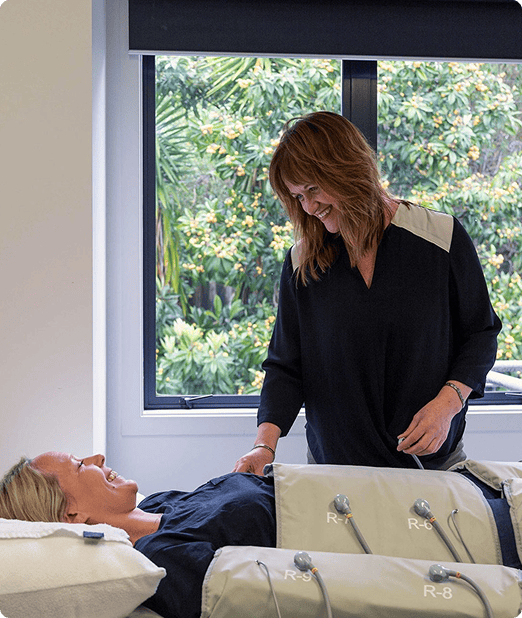
The intervention used a spinal thermal massage bed together with intermittent pneumatic calf compression.

The thermal massage component provided heat and mechanical stimulation to the spine, while the pneumatic component applied sequential compression to the calves.

This is important when interpreting the results.

The study investigated the combined intervention, rather than pneumatic compression in isolation.

What did the researchers measure?

The researchers looked at several different outcomes.

Pain: Pain intensity was assessed using a visual analogue scale (VAS).

This provided a numerical measure of how severe participants’ pain was before and after treatment.

Posture: The researchers measured trunk and pelvic tilting angles, providing an objective indication of changes in spinal and pelvic alignment.

Autonomic nervous system stress: The study also included a measure of stress associated with the autonomic nervous system.

This is particularly interesting because it means the researchers weren’t looking solely at pain and posture — they were also investigating a physiological measure related to the body’s stress regulation.

Disability and quality of life: The researchers used the Oswestry Disability Index (ODI) to assess disability associated with low back pain.

They also used the EuroQol five-dimensions questionnaire to assess quality of life.

What did they find?

1. Pain significantly decreased

One of the clearest findings was a significant reduction in pain.

Pain scores decreased significantly between:

BaselineMid-term assessment:
p = 0.002

Baseline Post-test:
p = 0.001

This means the reduction in pain was statistically significant both during the intervention and after the four-week programme.

For people living with chronic low back pain, this is an important finding because persistent pain can become a significant barrier to movement and everyday activity.

2. Posture improved

The researchers also found significant improvements in trunk and pelvic tilting angles.

The changes were highly statistically significant, with p < 0.001.

This suggests that the intervention was associated with measurable changes in posture and alignment.

However, this does not mean that pneumatic compression alone corrects posture.

3. Measures of stress decreased

Perhaps the most interesting finding from a wellbeing perspective was the change in autonomic nervous system stress.

Stress scores decreased significantly between:

Baseline → Mid-term assessment:
p = 0.037

Baseline → Post-test:
p = 0.019

In other words, participants demonstrated statistically significant reductions in the study’s measure of autonomic nervous system stress during and after the four-week intervention. 

4. Quality of life did not significantly change

Interestingly, despite improvements in pain, posture and stress, the researchers did not find significant changes in overall quality of life.

They also found no significant change in disability levels.

This is a useful reminder that improvements in individual symptoms do not necessarily translate immediately into measurable improvements across broader quality-of-life or disability questionnaires.

How might these findings fit together?

Chronic pain can create a complex cycle. Pain can affect movement and posture, while persistent discomfort may contribute to stress. Changes in movement patterns can, in turn, place additional demands on the body.

The intervention used in this study took a multi-dimensional approach, combining heat, massage and pneumatic compression.

The improvements observed across pain, posture and autonomic nervous system stress suggest that this type of integrated treatment may influence several aspects of the experience of chronic pain.

The study does not establish a specific mechanism for these improvements. The researchers investigated the outcomes rather than demonstrating exactly how each component produced its effects.

What does this tell us about pneumatic compression?

The findings are promising, but they need to be interpreted carefully.

The study provides evidence that a treatment programme incorporating intermittent pneumatic calf compression combined with thermal massage was associated with:

  • Reduced pain
  • Reduced autonomic nervous system stress
  • Improved trunk alignment
  • Improved pelvic alignment


The study provides evidence supporting further investigation into multi-modal therapies that combine compression, thermal therapy and mechanical stimulation.

What about wellbeing?

The study’s findings are particularly interesting when viewed through the lens of wellbeing.  The researchers set out to investigate not only pain, but also stress and quality of life. While quality of life did not significantly change, the measure of autonomic nervous system stress did improve significantly.

This suggests that measurable physiological changes in stress can occur even when broader quality-of-life scores remain unchanged. It also highlights why future research looking at the relationship between pneumatic compression, autonomic regulation and subjective wellbeing could be valuable.

What are the limitations?

There are several important limitations to keep in mind.

Small sample size: Only 23 participants completed the intervention. A larger study would provide greater confidence that the results can be generalized to the broader population of older adults with chronic low back pain.

No compression-only comparison: The biggest limitation for understanding pneumatic compression specifically is that participants received a combined treatment.

The study suggested that the combination of all 3 treatments, Thermal therapy, Massage, & Pneumatic compression provides improvement.

Specific population: Participants were older adults aged 65–80 with chronic low back pain.

The bigger picture

This study adds another interesting piece to the growing body of research around compression and recovery. It demonstrates that an intervention combining thermal massage and intermittent pneumatic compression was associated with significant improvements in pain, posture and autonomic nervous system stress in older adults with chronic low back pain.

Perhaps most importantly for future research, the study suggests that the effects of these therapies may extend beyond local physical symptoms. The reduction in autonomic nervous system stress provides another reason to investigate the relationship between physical therapies, cardiovascular regulation and the body’s response to stress.

While the research is still developing the evidence in this study supports the finding that:

Pneumatic compression, when incorporated into a broader thermal and massage intervention, was associated with improvements in pain and measures of autonomic nervous system stress.

Key takeaway

A four-week programme combining spinal thermal massage and intermittent pneumatic calf compression significantly reduced pain and autonomic nervous system stress in older adults with chronic low back pain, while also improving measures of trunk and pelvic alignment.

Because the treatment combined several modalities, the results cannot be attributed to pneumatic compression alone. The findings provide an interesting foundation for further research into how compression, thermal therapy and mechanical stimulation may work together to support physical recovery and the body’s response to stress.

Reference

Salazar Fajardo, J. C., Oh, S., Kim, B., Kim, S., Jang, G., & Yoon, B. (2023). Pain Reduction and Posture Alignment Improvement in Older Adults with Chronic Low Back Pain: A Novel Approach Using Spinal Thermal Massage Bed and Calf Pneumatic Cell Compression. Medical Science Monitor, 29, e940944. https://doi.org/10.12659/MSM.940944

Bring Full-Body Lymphatic Therapy to Your Clinic

Flowpresso is a multi-modality system combining:

Perfect for detox programs, recovery protocols, sleep optimization, and emotional wellness.

Select your currency

4th of July Promo

 Get 25% off retail price Flow Vibe II by using the code AMERICA250 

Available 3 July – 12 July 

Only available in USA and New Zealand