

Home / RESEARCH / Pneumatic Compression and the Autonomic Nervous System

Pneumatic Compression and the Autonomic Nervous System

Pneumatic Compression and the Autonomic Nervous System: What the Research Shows

Could intermittent pneumatic compression influence the body’s autonomic nervous system?

Our autonomic nervous system plays an essential role in regulating functions that happen automatically — including heart rate, blood pressure and cardiovascular responses.

It consists broadly of two complementary branches:

  • The sympathetic nervous system, which helps the body respond to stress and increased demand.
  • The parasympathetic nervous system, which supports rest, recovery and cardiovascular regulation.


A study published in the American Journal of Surgery investigated whether intermittent sequential pneumatic compression could influence this balance.

The findings were particularly interesting: when pneumatic compression was applied during laparoscopic surgery, researchers observed an increase in parasympathetic cardiac activity, suggesting that pneumatic compression may influence autonomic cardiovascular control.

Bring Lymphatic Care to Your Clinic

*For licensed practitioner and clinic owner inquiries only

The study at a glance

Study: Improving the adverse changes in cardiac autonomic nervous control during laparoscopic surgery, using an intermittent sequential pneumatic compression device

Published: January 2004
Journal: American Journal of Surgery
Participants: 15 patients undergoing elective laparoscopic gallbladder surgery
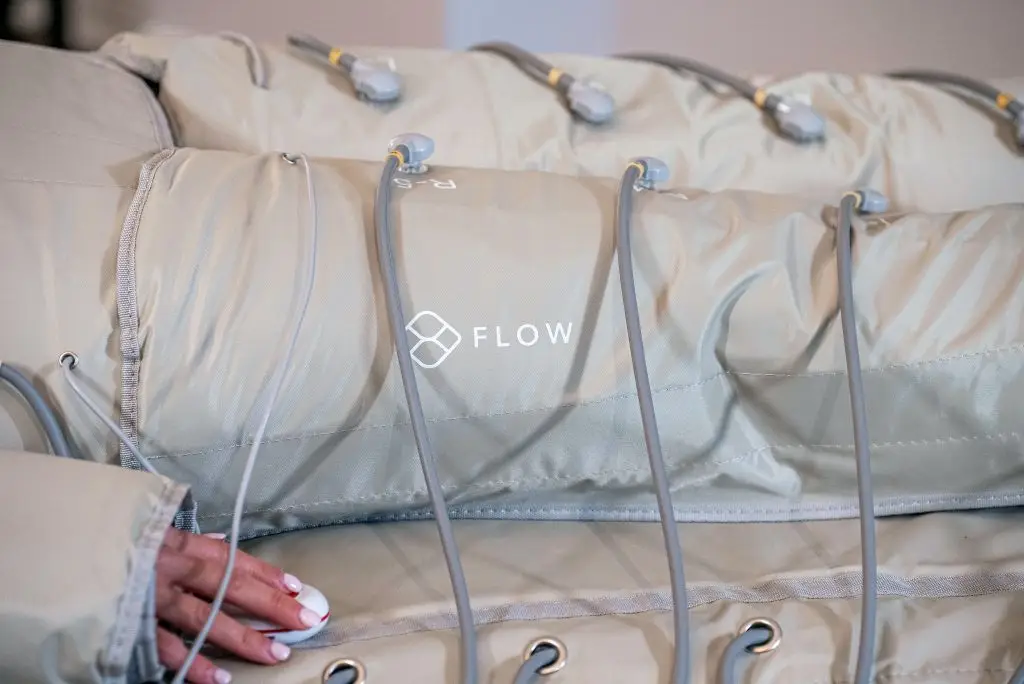
Intervention: Intermittent sequential pneumatic compression of the lower extremities
Measurement: Heart rate variability (HRV) and spectral analysis of cardiac autonomic activity

Importantly, this study used heart rate variability analysis to examine changes in autonomic nervous system activity.

Why did the researchers conduct the study?

Laparoscopic surgery requires the abdomen to be inflated with gas, creating what is known as positive-pressure pneumoperitoneum.

While this is an important part of laparoscopic surgery, the resulting pressure can produce cardiovascular changes.

The researchers noted that creating this pressure can increase sympathetic cardiac activity — essentially shifting cardiovascular regulation towards a more activated state.

They wanted to know whether intermittent sequential pneumatic compression applied to the legs could counteract some of these cardiovascular effects.

Their hypothesis was that by helping reverse the haemodynamic changes associated with pneumoperitoneum, pneumatic compression might also improve cardiac autonomic control.

How was the study conducted?

The researchers followed 15 patients without cardiorespiratory disease who were undergoing elective laparoscopic cholecystectomy.

Each patient effectively acted as their own control.

The researchers measured cardiac autonomic activity using spectral analysis of heart rate variability.

Measurements were taken during several stages:

  • After anaesthesia was induced
  • After the abdominal pressure associated with pneumoperitoneum was established
  • After the intermittent pneumatic compression device was activated


The compression device was applied to the patients’ lower extremities.

What did the researchers find?

1. Abdominal pressure increased sympathetic activity

When pneumoperitoneum was created, the researchers observed an increase in sympathetic cardiac activity.

This was reflected by an increase in power within the low-frequency component of heart rate variability.

In simple terms, the cardiovascular system appeared to shift towards a more sympathetic — or activated — state in response to the surgical conditions.

2. Pneumatic compression increased parasympathetic activity

This was the most significant finding.

When the intermittent pneumatic compression device was activated, researchers observed a significant increase in the high-frequency component of heart rate variability in all patients.

The researchers interpreted this increase as evidence of increased parasympathetic cardiac activity.

The parasympathetic nervous system is commonly associated with the body’s “rest and recovery” functions.

Therefore, the finding suggests that intermittent pneumatic compression may influence the autonomic regulation of the cardiovascular system in a direction associated with greater parasympathetic activity.

Why is parasympathetic activity important?

The parasympathetic nervous system plays an important role in cardiovascular regulation and recovery.

When the body is under stress or physical demand, sympathetic activity generally increases. During periods of rest and recovery, parasympathetic influences become increasingly important.

The ability of the autonomic nervous system to continually adjust cardiovascular function is an important part of maintaining physiological balance.

The researchers therefore interpreted the increase in parasympathetic activity observed during pneumatic compression as an improvement in cardiac autonomic control.

What does this mean for wellbeing and post-surgical recovery?

This is where the study becomes particularly interesting from a broader wellness perspective. The researchers found that pneumatic compression was associated with measurable changes in autonomic cardiovascular regulation — specifically, an increase in parasympathetic activity.

That provides a physiological basis for investigating whether pneumatic compression may have effects beyond simply supporting circulation. However, it is important to be precise about what this study did and did not demonstrate.

The study measured autonomic nervous system activity. It did not measure subjective wellbeing, stress levels, sleep quality or mood.

What we can say is that the intervention was associated with a measurable shift in cardiac autonomic activity towards increased parasympathetic influence.

That is an interesting finding because the autonomic nervous system is intimately involved in the body’s regulation of cardiovascular function and recovery.

What did the researchers conclude?

The researchers concluded that intermittent sequential pneumatic compression during laparoscopic surgery may improve cardiac autonomic control by enhancing protective parasympathetic activity.

They suggested that this could have clinical significance, particularly for people with cardiac disease, because improved autonomic control and HRV may potentially influence the threshold at which certain cardiac arrhythmias occur.

Importantly, however, that is a potential clinical implication, rather than an outcome directly tested by this study.

The limitations of this study

The study was relatively small, involving just 15 surgical patients. It was also conducted in a very specific physiological situation: patients undergoing laparoscopic surgery under anaesthesia. The study provides evidence that pneumatic compression can influence cardiac autonomic activity under these conditions.

Why this research is still important

Despite its limitations, this study is significant because it goes beyond simply looking at blood flow or swelling. The researchers directly examined the autonomic nervous system using heart rate variability and observed a measurable response to intermittent sequential pneumatic compression.

That makes this study an important piece of the emerging picture around compression therapy. It suggests that the effects of pneumatic compression may involve more than mechanical movement of blood and fluid through the limbs.

There may also be a relationship between peripheral compression and the body’s central cardiovascular regulation.

The bigger picture

When we think about recovery, we often focus on muscles, circulation and physical fatigue. But recovery is also about regulation. The autonomic nervous system continually responds to the demands placed on the body, helping regulate cardiovascular function as we move between states of activity, stress and rest.

This study provides evidence that intermittent pneumatic compression can influence that system. Following the application of pneumatic compression, all 15 patients demonstrated an increase in the high-frequency component of HRV, which the researchers interpreted as increased parasympathetic activity.

Key takeaway

This study found that intermittent sequential pneumatic compression was associated with increased parasympathetic cardiac activity, measured through heart rate variability.

Unlike studies that only measure circulation or cardiovascular recovery, this research directly investigated autonomic nervous system activity. The results suggest that pneumatic compression may influence the body’s autonomic cardiovascular regulation potentially supporting a shift towards parasympathetic activity.

Reference

Bickel, A., Yahalom, M., Roguin, N., Ivry, S., Breslava, J., Frankel, R., & Eitan, A. (2004). Improving the adverse changes in cardiac autonomic nervous control during laparoscopic surgery, using an intermittent sequential pneumatic compression device. American Journal of Surgery, 187(1), 124–127. https://doi.org/10.1016/j.amjsurg.2003.02.008

Bring Full-Body Lymphatic Therapy to Your Clinic

Flowpresso is a multi-modality system combining:

Perfect for detox programs, recovery protocols, sleep optimization, and emotional wellness.

Select your currency

4th of July Promo

 Get 25% off retail price Flow Vibe II by using the code AMERICA250 

Available 3 July – 12 July 

Only available in USA and New Zealand