
Home / RESEARCH / Lymphatic Compression Suit: Evidence for Leg Lymphedema

Lymphatic Compression Suit: Evidence for Leg Lymphedema

Lymphatic Compression Suit: What Does the Research Show for Lower-Limb Lymphedema?

A lymphatic compression suit can offer a practical way to deliver intermittent pneumatic compression, but what does the evidence support? A 2026 systematic review examined seven randomized controlled trials involving adults with chronic lower-limb lymphedema. All seven reported reduced limb volume during treatment, and five found significant differences between treatment groups. The authors found that the evidence in favor of swelling reduction to be of moderate certainty.

For licensed healthcare practitioners, the findings support considering pneumatic compression within an individualized management plan, while recognizing that device design, treatment protocols and patient suitability influence how the evidence applies.
Bring Lymphatic Care to Your Clinic

*For licensed practitioner and clinic owner inquiries only

At a glance

Research focus: Intermittent pneumatic compression (IPC) for adults with chronic lower-extremity lymphedema.

Key finding: All seven included trials reported significant reductions in limb volume from baseline; five also found significant differences between groups.

Clinical significance: Moderate-certainty evidence supports IPC for reducing lower-limb swelling. Evidence does not establish one preferred device or universal protocol.

Article: Published in National Library of Medicine in 2026.

What does a lymphatic compression suit have to do with this research?

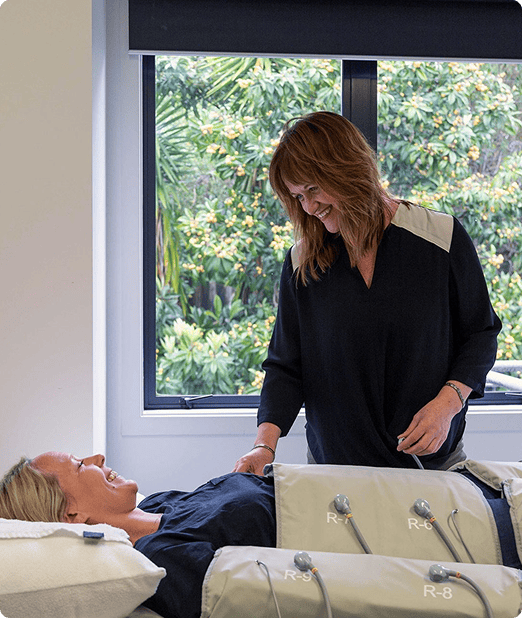
A “lymphatic compression suit” is the recognizable term that is often used to describe the clinical term for an intermittent pneumatic compression, or IPC.

IPC devices use inflatable garment chambers to apply and release external pressure. There are different designs of IPC devices, so the garments may cover individual limbs or additional body regions, and the pressure patterns, chamber arrangements and treatment sequences may vary.

That distinction matters when discussing research with patients. This review investigated IPC devices for lower-limb lymphedema; it did not establish equivalent results for every product described as a compression suit.

A full-body system, a leg sleeve and a device combining compression with heat may share a pneumatic compression component, yet differ substantially in their overall treatment.

Practitioners should therefore connect the findings to the specific technology studied. The evidence supports a therapeutic approach for lymphatic compression suits, while the suitability and expected performance of an individual system require closer assessment.

How did the researchers assess pneumatic compression for lymphedema?

The authors searched CINAHL, Embase and MEDLINE for English-language randomized controlled trials published between January 2010 and January 2025.

Seven trials met the criteria for the lower-limb review. The researchers followed PRISMA reporting methods, assessed study bias with the Cochrane risk-of-bias tool and evaluated evidence certainty using GRADE.

Randomized trials help answer a question that before-and-after observations cannot fully resolve: does an intervention produce a different result from the treatment used for comparison?

The review examined both changes within treatment groups and differences between groups. It also considered patient-reported outcomes alongside physical measurements.

However, the studies differed enough in their devices, treatment combinations and comparison groups that the authors could not perform a meta-analysis. Consequently, the review provides a structured assessment of the evidence rather than one clear treatment benefit.


Which patients were represented in the seven trials?

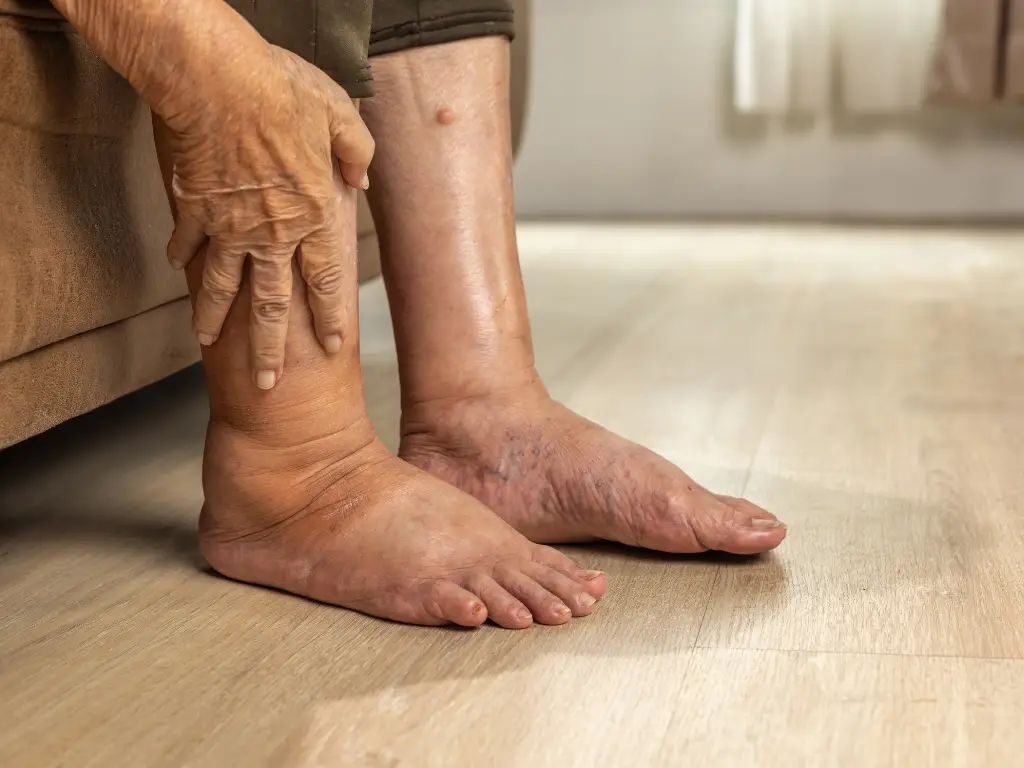
The review focused on adults with unilateral or bilateral lower-limb lymphedema present for at least six months while they were in the maintenance phase of lymphedema treatment.

The average trial included approximately 54 participants. Mean participant age was 55 years, and women represented 67% of the study population.

Most participants had secondary lymphedema. Three studies also included people with primary lymphedema, while chronic venous insufficiency was the most common underlying cause across the included trials.

Eligibility criteria included an ankle-brachial index of at least 0.8, no active infection or acute venous thrombosis, and the ability to use the device and follow treatment requirements.

These details define the population behind the findings. The results are most directly relevant to appropriately assessed adults with established chronic swelling. They should not automatically be extended to children, newly developed unexplained edema or patients whose clinical circumstances differ substantially from those studied.

Does pneumatic compression reduce lower-limb swelling?

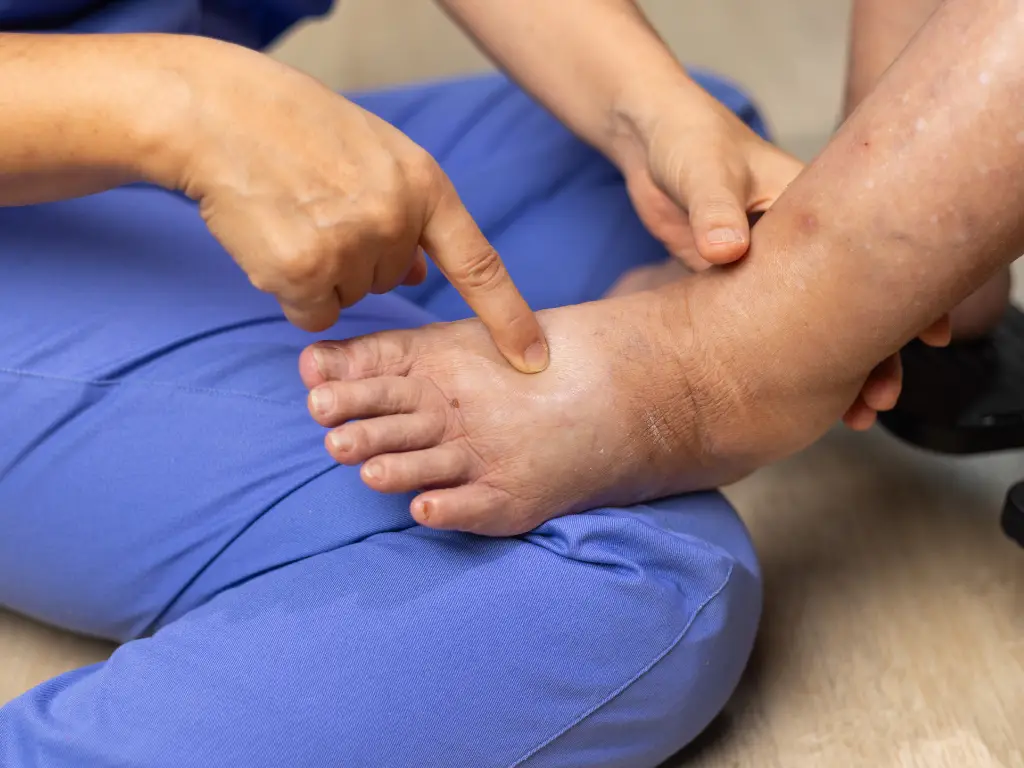
The most consistent finding was a reduction in limb volume.

All seven trials reported statistically significant improvements when comparing baseline measurements with measurements taken at the end of treatment. Five also identified significant differences between treatment groups for edema reduction.

These are encouraging findings, but the two comparisons answer different questions.

A baseline-to-treatment improvement shows that swelling decreased during the treatment period. A difference between groups provides stronger evidence that the treatment strategy influenced the outcome relative to its comparator.

Interpretation becomes more difficult when several therapies are delivered together. In three trials, IPC was combined with complex decongestive therapy, making it harder to isolate the contribution of compression alone.

The authors nevertheless concluded that there was moderate-certainty evidence that IPC reduces lower-limb edema, volume or circumference compared with standard care or no IPC. They did not establish a single expected percentage reduction for every patient.

Did patients report improvements beyond smaller limb measurements?

Five trials included patient-reported outcomes, using generic or lymphedema-specific assessment tools.

These included SF-36, visual analogue scales, EQ-5D-3L, Lymph-ICF-LL and LYMQOL. Significant improvements within groups were reported in three trials.

For practitioners, this adds a depth to the findings, as a treatment assessment becomes more meaningful when it captures how someone feels and functions alongside changes in limb size.

Approach this assessment by recording swelling objectively, then ask whether the patient notices a worthwhile change in daily life.

Someone may value easier movement, better garment tolerance or reduced disruption to normal activities. These should be assessed directly rather than assumed from a smaller circumference measurement.

How reliable is the evidence for a lymphatic compression suit?

The review’s overall conclusion was moderate certainty, with moderate methodological quality and a moderate risk of bias.

This supports clinical consideration of IPC while leaving important questions unresolved.

Several features limited confidence. Trials were relatively small, treatment approaches varied, and only three reported an advance calculation to determine the sample size needed to detect an effect.

Comparison groups also differed. Some studies compared IPC plus another therapy with standard treatment, while others compared different devices or operating modes.

These differences prevented the researchers from combining the results into one reliable numerical estimate.

For clinical conversations, the balanced message is straightforward: pneumatic compression has supportive randomized evidence for lower-limb swelling reduction, but the size and durability of benefit remain patient- and protocol-dependent. The review does not justify promising a particular outcome before treatment begins.

For practitioners, this adds a depth to the findings, as a treatment assessment becomes more meaningful when it captures how someone feels and functions alongside changes in limb size.

Approach this assessment by recording swelling objectively, then ask whether the patient notices a worthwhile change in daily life.

Someone may value easier movement, better garment tolerance or reduced disruption to normal activities. These should be assessed directly rather than assumed from a smaller circumference measurement.

Does the review identify the best pressure, session length or treatment schedule?

No universal prescription emerged, as the review’s overall findings do not establish one ideal pressure setting or inflation sequence.

For a practitioner evaluating a lymphatic compression suit, the relevant questions concern its intended use, garment coverage, available settings, instructions and evidence in comparable patients.

Treatment planning should follow the specific device’s instructions and the patient’s assessed needs. A protocol should also be realistic enough for the person to maintain. An effective treatment plan on paper has limited value if setup, discomfort or time demands prevent consistent use.

What should practitioners assess before starting treatment?

Patient selection deserves the same attention as device selection.

The participants were screened for factors including arterial status, active infection and acute venous thrombosis. Those eligibility criteria help explain the evidence, but they are not a complete safety checklist for every device.

A practical assessment should establish the diagnosis, distribution and history of swelling, relevant comorbidities, skin condition, sensation, mobility and ability to manage the garment.

Review the device’s contraindications and precautions, and investigate new or unexplained symptoms before beginning treatment.

The ankle-brachial index threshold reported in this review should not be presented as automatic clearance for treatment. Suitability remains an individual clinical decision informed by vascular assessment, the wider clinical picture and product-specific requirements.

What does this mean for practitioners?

The findings provide a reasonable basis for considering IPC in selected adults with chronic lower-limb lymphedema.

A useful starting point is to agree on a treatment goal the patient recognises. “Reduce edema” is clinically relevant, but “make it easier to wear my shoes” gives the assessment a practical anchor.

Then establish a baseline and a review plan.

Record limb measurements consistently, document the prescribed device settings and schedule, and use an appropriate symptom or quality-of-life measure where feasible.

At follow-up, assess benefit, tolerability and actual use.

This approach turns a device trial into an accountable clinical decision. Continuing treatment should reflect meaningful benefit and suitability, supported by observations that both practitioner and patient can understand.

How should clinicians measure whether treatment is helping?

Circumference measurements were the most common method used to estimate volume changes in the reviewed trials.

In practice, consistency is essential. Use the same anatomical landmarks, positioning and measurement method, and aim for comparable timing at each assessment.

Record enough treatment detail to interpret the result, including recent device use and changes to other therapies.

Add patient-centred measures that relate to the agreed goal. These might include a validated lymphedema questionnaire, a symptom rating or a specific functional task.

Avoid treating statistical significance as a synonym for clinical importance. A measurable reduction may be welcome, yet still fall short of what the patient needs.

Equally, a patient may report worthwhile functional improvement that deserves documentation even when circumference changes are modest. Both findings help guide the next treatment decision

What is the bigger picture for lymphatic health and everyday wellbeing?

The wider value of this research lies in making chronic swelling management more measurable and more responsive to patients’ lives.

For someone managing persistent leg swelling, the relevant outcome extends beyond the treatment room. It includes whether the care plan is manageable and whether improvements support ordinary activities.

The review strengthens the case for studying both limb volume and patient-reported outcomes together.

It also establishes a boundary around broader health claims. These trials do not demonstrate improved whole-body detoxification, enhanced immunity, weight loss or better brain clearance. Lower-limb volume reduction cannot stand in for measurements of those outcomes.

For practitioners discussing lymphatic health, this distinction supports credible education. Explain the demonstrated benefit clearly, recognise the wider consequences of chronic swelling, and identify broader proposed effects as questions requiring their own research.

Key takeaway

  • Swelling reduction is the strongest finding: all seven trials reported reduced limb volume during treatment.
  • Comparative evidence adds support: five trials found significant differences between treatment groups.
  • Certainty was moderate: small studies, varied protocols and treatment combinations limit precision.
  • Quality-of-life findings were less consistent: three trials reported significant within-group improvements.
  • Individual assessment remains essential: patient suitability, device instructions and realistic treatment routines matter.
  • Product claims need product evidence: findings about IPC do not validate every suit or combined therapy.


The clinical value is a stronger basis for considering pneumatic compression within structured, measurable lower-limb lymphedema care.

Reference

O’Donnell TF Jr, Tedesco A, Fish J. A systematic review of contemporary randomized controlled trials for treatment of lower extremity lymphedema by intermittent pneumatic compression devices. Journal of Vascular Surgery: Venous and Lymphatic Disorders. 2026;14(4):102500. Published online April 15, 2026. doi: 10.1016/j.jvsv.2026.102500. PMID: 41997536. View the official PubMed record. PubMed

Bring Full-Body Lymphatic Therapy to Your Clinic

Flowpresso is a multi-modality system combining:

Perfect for detox programs, recovery protocols, sleep optimization, and emotional wellness.

Select your currency