

Quick Summary:
If you’re a U.S. healthcare practice considering Flowpresso before the end of 2026, your equipment investment may have tax advantages. Eligible businesses may be able to use Section 179 or 100% bonus depreciation for qualifying equipment, subject to applicable requirements. Before making a purchase, explore the potential tax treatment, consider the overall ROI of the investment, and speak with your tax professional to understand what may apply to your business.
Considering Flowpresso Before Year-End? What Healthcare Practices Should Know About Section 179 and Bonus Depreciation
Already considering Flowpresso for your practice? Your 2026 equipment investment may have tax advantages.
For healthcare practices considering new equipment before the end of 2026, the timing of an investment may be worth discussing with your tax professional.
Section 179 and 100% bonus depreciation may allow eligible U.S. businesses to accelerate deductions for qualifying equipment purchases, potentially reducing taxable income in the year the equipment is placed in service.
For practices already considering adding Flowpresso to their services, this could make year-end an important time to explore the numbers.
Important: This article is for general informational purposes only and is not tax or financial advice. Eligibility and the amount of any deduction depend on individual circumstances and applicable IRS rules. Always consult your tax professional before making a purchasing decision.
What is Section 179?
Section 179 is a provision of the U.S. tax code that allows eligible businesses to deduct the cost of qualifying equipment in the year it is placed in service, subject to applicable limitations and requirements.
For 2026, the maximum Section 179 deduction is $2.56 million. The deduction begins to phase out when total qualifying equipment purchases exceed $4.09 million.
That means eligible businesses making qualifying equipment investments may be able to accelerate the tax deduction rather than recovering the equipment cost solely through depreciation over multiple years.
For a healthcare practice, eligible equipment could include certain types of professional equipment used in the ordinary course of business.
What about 100% bonus depreciation?
Section 179 isn’t the only provision practices may want to discuss with their tax advisors.
100% bonus depreciation is currently available for qualifying property acquired and placed in service after January 19, 2025, subject to applicable requirements.
Bonus depreciation can allow eligible businesses to accelerate depreciation deductions for qualifying property.
Whether Section 179, bonus depreciation, or another depreciation treatment applies to a particular purchase depends on the circumstances of the business, the equipment and the transaction.
That’s why it’s important to speak with your tax professional rather than assuming a particular treatment applies.
What does this mean if you're considering Flowpresso?
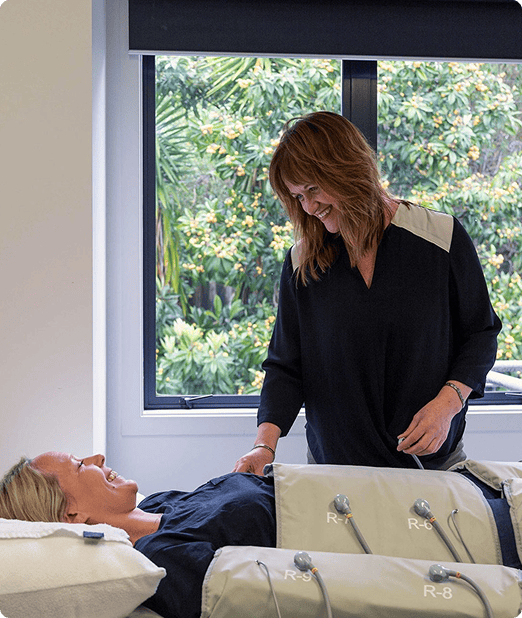
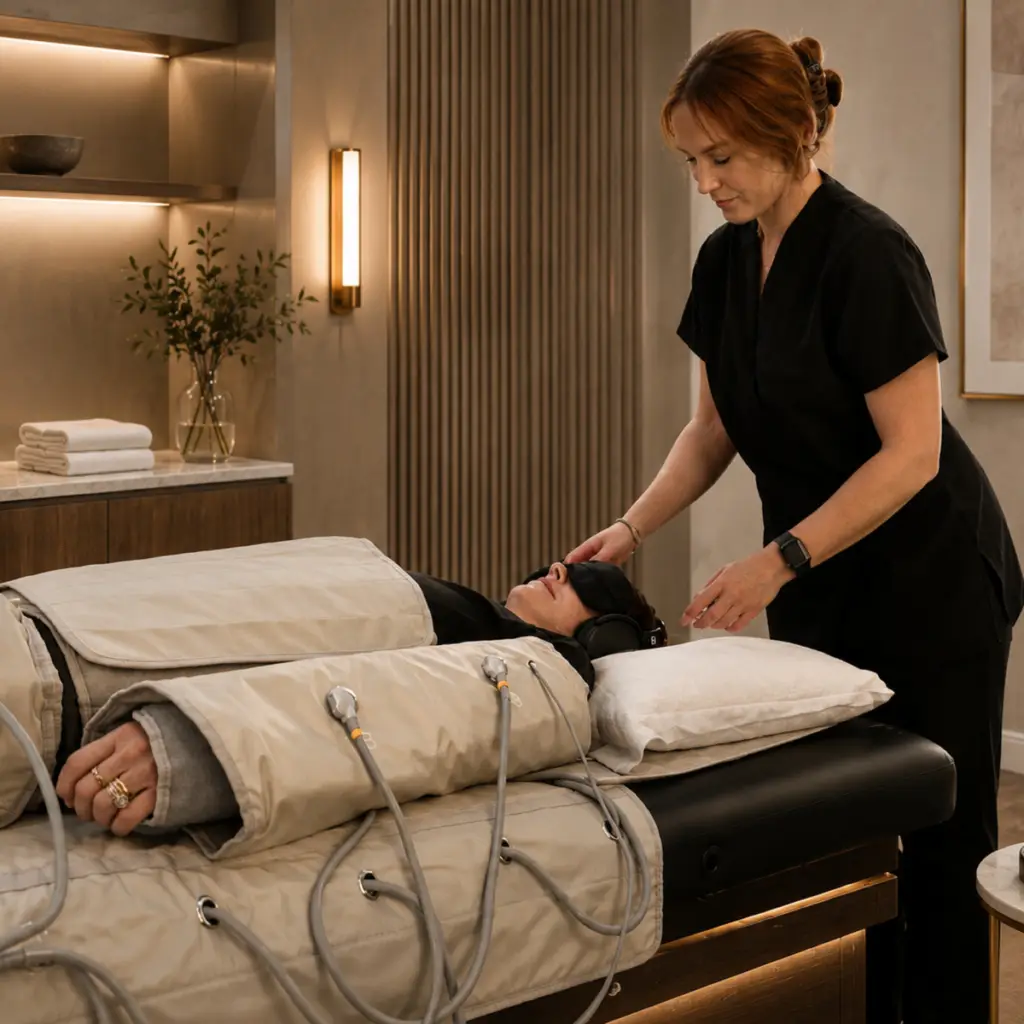
Flowpresso is a professional equipment investment designed for healthcare and wellness practices.
If you’ve already been considering bringing Flowpresso into your practice, the end of the tax year may be a useful time to look at the complete financial picture.
Your evaluation could include:
- The cost of the Flowpresso system
- Your expected treatment volume
- Your potential revenue from Flowpresso services
- Your expected return on the equipment investment
- Your available capital
- Your projected business income
- Whether the equipment may qualify for Section 179 or bonus depreciation
- When the equipment would be placed in service
- Your individual tax circumstances
The potential tax treatment is simply one part of the investment decision.

Don't confuse a tax deduction with a tax refund
This is an important distinction.
A tax deduction generally reduces the amount of income subject to tax. It does not mean the government refunds the purchase price of the equipment.
For example, a hypothetical $50,000 qualifying equipment purchase does not mean the business receives $50,000 back.
The actual tax benefit depends on factors including the business’s taxable income, tax rate, eligibility, applicable limitations and which depreciation provisions apply.
Your tax professional can calculate the potential impact for your specific situation.
Why timing matters
For many tax provisions, equipment must be placed in service during the relevant tax year.
That means simply ordering equipment before December 31 may not necessarily be enough to achieve a particular tax treatment.
If you’re considering Flowpresso as a 2026 investment, talk with your tax professional early enough to understand what timing requirements may apply to your purchase.
A simple way to explore the opportunity
If Flowpresso is already on your equipment wish list, you can start by estimating the potential tax impact using a reputable 2026 Section 179 calculator.
Then take the estimate to your tax professional.
Ask:
“If I purchase and place this equipment in service in 2026, what tax treatment may be available to my business?”
Your advisor can help determine whether Section 179, bonus depreciation or another treatment applies to your individual circumstances.
The bigger question: Is Flowpresso right for your practice?
Tax treatment shouldn’t be the only reason to purchase equipment.
The more important question is whether Flowpresso makes sense as a business investment for your practice.
Consider:
- Does it complement the services you already offer?
- Is there demand among your existing or prospective patients?
- Can you build Flowpresso into your treatment offering?
- What could your treatment revenue look like?
- How quickly could the equipment potentially contribute to your practice?
- Does the investment align with your long-term growth strategy?
For practices that have already been considering Flowpresso, understanding the potential tax treatment can simply add another piece of information to the decision.
Ready to explore Flowpresso?
If you’ve been considering bringing Flowpresso into your practice, now may be a good time to explore the numbers.
Start by calculating your potential Section 179 deduction, then speak with your tax professional about your individual circumstances.
FAQ's
Does Flowpresso qualify for Section 179?
Flowpresso is professional equipment that may qualify for tax treatment available to eligible businesses. However, eligibility depends on applicable IRS requirements and the individual circumstances of the purchaser. Speak with your tax professional to determine whether your purchase qualifies.
Can I deduct the entire cost of Flowpresso?
Some eligible equipment purchases may qualify for accelerated deductions, but the amount and treatment depend on the business, equipment, purchase and applicable tax rules. Your tax professional can determine what applies to you.
Does Section 179 mean Flowpresso is free?
No. A tax deduction is not the same as receiving the purchase price back. A deduction generally reduces taxable income, which may reduce the amount of tax owed.
Do I need to buy Flowpresso before December 31?
Tax treatment can depend on when qualifying equipment is acquired and placed in service. If you’re considering a 2026 purchase, speak with your tax professional about the applicable timing requirements.
Can I use Section 179 and bonus depreciation?
Potentially, but the interaction between different depreciation provisions can be complex. Your tax professional can determine which provisions apply to your specific purchase and circumstances.
Where can I calculate my potential Section 179 deduction?
There are several online Section 179 calculators available. Use one as an initial estimate only and discuss the results with your tax professional before making a purchasing decision.
Tax Disclaimer: The information provided in this article is for general informational purposes only and does not constitute tax, accounting, legal or financial advice. Flowpresso does not provide tax advice and makes no representation or guarantee regarding the tax treatment of any purchase. Eligibility for Section 179, bonus depreciation or other tax provisions depends on individual circumstances and applicable laws and regulations. Please consult your qualified tax professional before making any purchasing decision.